Reactscape device:space
Project 1.001 – Observe . Analyze . Illustrate
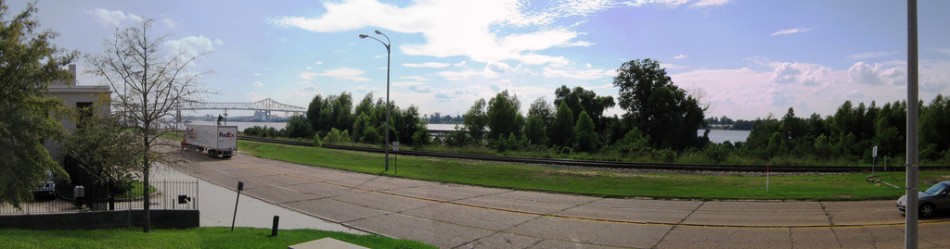
Landscapes, environments and cities are complex and difficult to comprehend, they are ephemeral and experiential as well as planned and structured. The initial phase of discovery will examine two aspects of observation and analysis. The first will ask you to create models, maps and diagrams that create a framework to understand the urban scale relationships of the site. The second will ask you to identify experiences that are sensorial and visceral but not always quantifiable.
Understanding what it means to experience a site is intuitive and tends to be anecdotal, translating that information into a mode of representation requires a designer to carefully analyze and synthesize information. Sites are constantly in flux through a broad range of changes in phenomena. These temporal changes can occur through physcial or perceptual alterations in spatial conditions.
Inventory
Base Map – Using the provided AutoCAD base map a group will develop a verified site plan. The site plan will provide additional details near DeSoto Park and around the Visitor’s Center. This will require site measurements and additional inventory as needed.
Framework – It is important to develop a clear series of measured drawings in order to fully analyze a site. Students will create two scales of mappings at their own discretion, one must show the site, neighborhood and its defined boundary, the second will show how the the site fits into the larger context of Baton Rouge. Each scaled base map should fit onto 24”x36” portrait sheets.
Students will form groups to create a series of overlays using either analog or digital media (TBD) that represent each of the following:
- roadways/circulation
- building massing/use
- vegetation
- hydrology/flood infrastructure
- topography
Each of these layers should be created with the highest craft and accuracy while also creating a beautiful representation of the site element and how it functions. It is important to determine at what scale each layer should be represented and if necessary to represent them at multiple scales. Be very deliberate about choosing a scale to represent a particular site element. Each group should coordinate with the class to make sure that all of the work reads as a unified piece.
Model – One group will develop a site model at a scale to be determined through discussion with their instructor. The model will represent the site and a sufficient context. The site will represent the current condition. The models topography will be constructed with chipboard, cut in the laser cutter, and the studio will determine extraneous materials through iterative prototypes
Case Studies – A group will develop six case studies focusing on landscape interventions the exemplify connections. The group will use the following two case studies as a starting point:
- Olympic Sculpture Park, Seattle, WA
- Louisville Waterfront Park, Louisville, KY
Using this as a starting point the group will research other precedents and develop four more case studies of their choosing. Each case study should give a general overview of the project (budget, site, designers, etc) and create an essential diagram that explains how the case study exemplifies a connection. The six case studies should be considered a body of work and therefore be similar in presentation and comparable.
Analysis
Upon completing the inventory the studio will complete a series of analytic diagrams that attempt to illustrate opportunities and constraints for connection and use. The diagrams are driven by the following:
Opportunities for program accomodating:
- ecological preserve
- civic space
- recreation
Express these opportunities through a graphic language that illustrates:
- connection
- barriers
- program activities
- spatial requirements
In order to accomplish this you will need to define each of these terms and determine what is necessary to create that particular type of landscape. The diagrams will be developed in groups.
Deliverables
(2) Base Plans, 24”x36” Portrait Layouts @ 2 Scales (scales TBD)
(TBD) Overlay Inventory, 24” x 36” Portrait Layouts (scales TBD)
Site Model (scale TBD)
(TBD) Analysis Diagrams, 24” x 36” Landscape or Portrait Layouts (scales TBD)
Case Studies, size and scales TBD
Site Observation 0.001 (vector) (30 photos, 15 drawings)
Site Observation 0.002 (section) (sections . scale TBD)
Due Monday, February 17th @ 1.30pm.
It is important that you are ready to pin-up with all of your work at 1.30pm. Anyone not present at 1.30 will be considered late.